
On a winter evening in Sydney, a fire does something a screen never will: it gathers people. That is why "media wall with fireplace" is one of the most searched media wall ideas in Australia. A fire gives the wall a heart when the television is dark, and warmth and light when it is not.
It also brings rules that ordinary joinery does not have. Heat, clearances and power all have to be settled before the wall is drawn. This is the order we work through them.
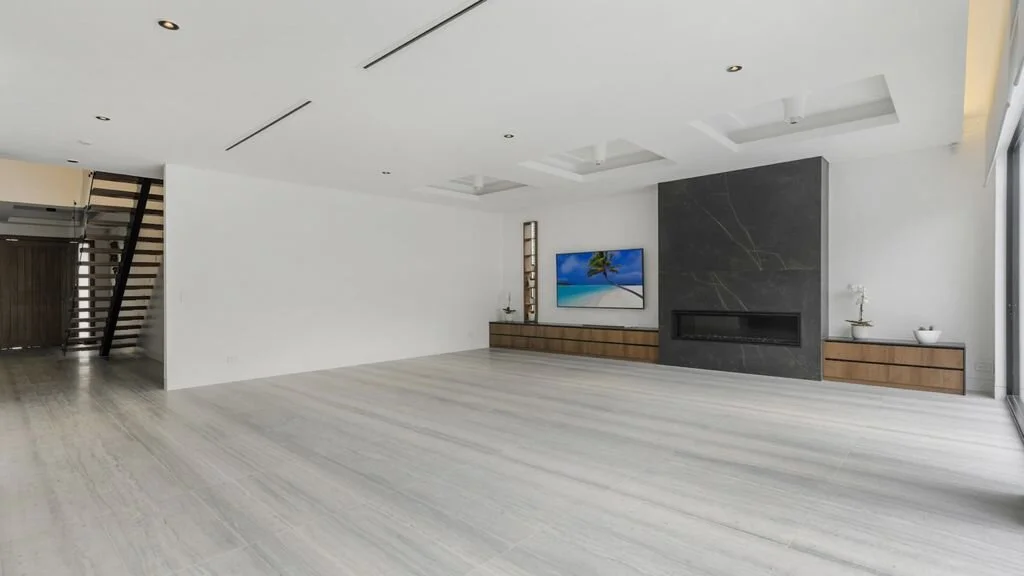
1. Choose the fireplace first
The fireplace shapes the design, so it comes before anything else.
Electric. The most common choice for a media wall. An electric fireplace sits within the joinery, needs no flue, and many models run the flame effect with the heat off. It needs power where the firebox sits.
Gas. Real heat and a real flame, with a gas line and a flue. Gas fireplaces set strict clearances to combustible materials such as timber and board, which limits what can sit around them.
Wood. Rare in a media wall. A solid-fuel fire needs a chimney or flue and large clearances, and the heat it throws makes a screen above it a poor idea.
Settle on the exact model before we draw. Every manufacturer publishes an installation manual, and its measurements become the starting point for the joinery.
2. Work from the manual, not a rule of thumb
The manual sets out:
the gap required above the firebox before anything else, including a television, can be fitted
how far timber, board and shelving must sit from the opening
what ventilation the firebox needs within the cabinetry
These figures vary from model to model. One Australian electric fireplace manual we checked asks for 100 mm above its top trim before a screen; other guides start at 200 mm. So we never design from a general figure — we design from the manual for your fireplace.
Check the television's operating temperature too. It is listed in the specifications, and the space above the fire needs to stay within it.
3. Keep the screen at a comfortable height
A fireplace pushes the television up the wall. Set it too high and every film is watched with your head tilted back.
Ways to keep it comfortable:
choose a low, wide firebox, which leaves more of the wall for the screen
set the fire close to floor level
place the fire and the screen side by side rather than stacked, where the wall is long enough
We draw the fire, the screen and your seating together in 3D, so you can see the sight line before anything is built.
4. Plan power and cables early
An electric fire, a television, a soundbar and a console all need power. Check the fireplace manual for its requirements; some models ask for their own power point. Your electrician should know the layout before the wall is lined, so outlets end up behind the joinery where they belong and cables run inside it to a ventilated cupboard.
5. Choose a surround that suits the heat
The material around a fire has to sit comfortably with warmth.
Sintered and porcelain stone. Thin, hard-wearing and composed near heat. We work with the Smartstone Sintered Collection and WK Stone's Quantum Porcelain.
Silica-free surfaces. WK Stone's Quantum Zero range is crystalline silica free.
Natural stone. Marble or granite for a classic hearth.
Timber and painted board. Beautiful across the rest of the wall, kept to the distances the manual allows.
Engineered stone has been banned in Australia since 1 July 2024, so it is no longer an option for new work. Our stone benchtops page shows the surfaces we use now.
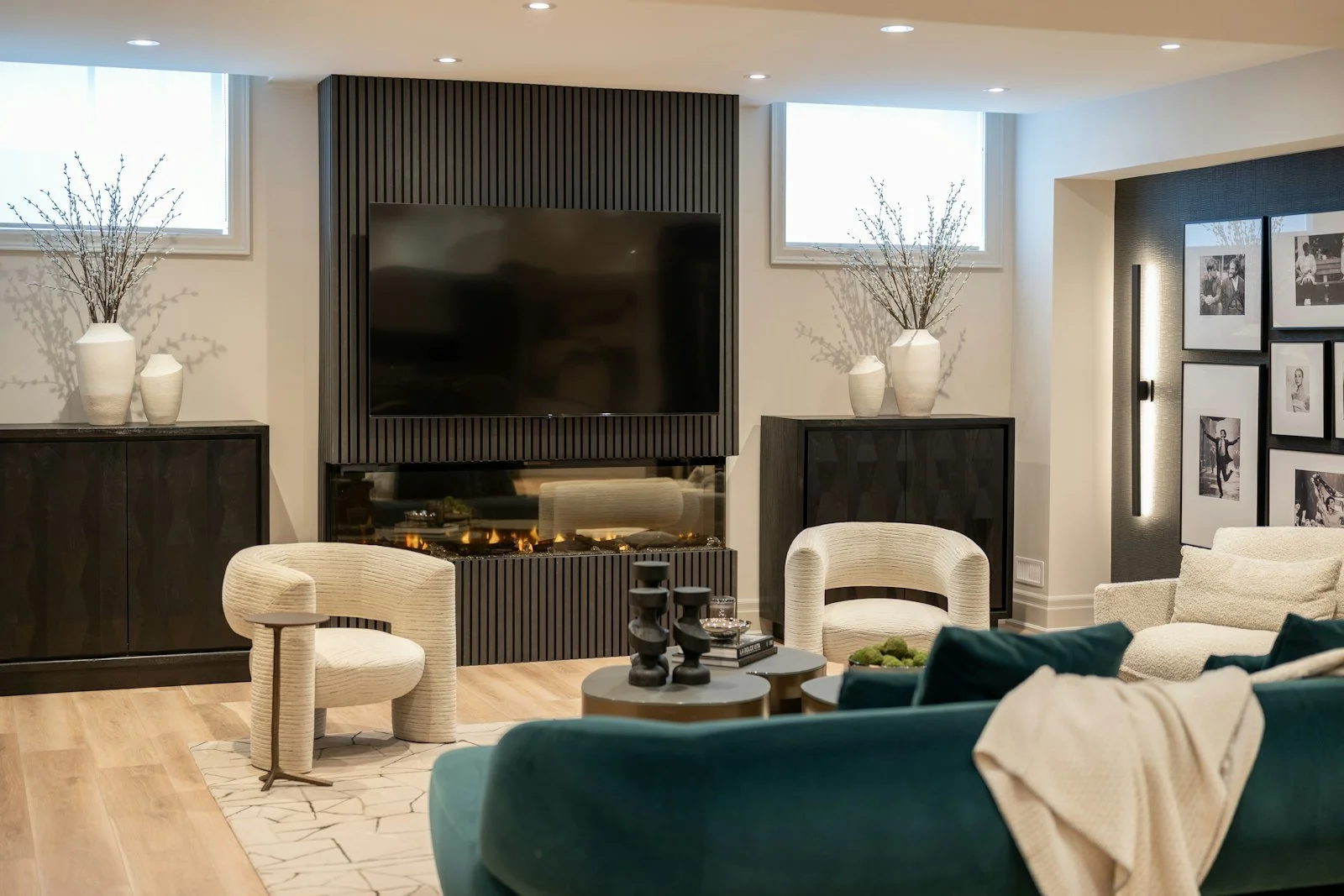
Fireplace media wall ideas
Fire low, screen above, cupboards either side. The classic arrangement — balanced, with storage to spare.
A long linear fire beneath a floating shelf. A wide, shallow firebox reads as a line of light under the screen.
Fire and screen side by side. In a long room, they can share the wall as equals, and the screen stays at a comfortable height.
Timber texture with stone where the heat is. Battens or fluting across the wall, with a stone surround framing the fire. Our Porta timber lining page shows the batten and fluted finishes we build.
Frequently asked questions
Can you put a TV above a fireplace in a media wall?
Yes, with an electric fireplace and the clearance its manual sets. With gas or wood it is harder, because of the heat that rises off the fire.
Do electric fireplaces get hot?
Many produce real heat when the heater is on, and the space above them warms. That is why the manufacturer's clearances matter, even for electric models.
Can I add a fireplace to an existing media wall?
Sometimes. It depends on the space within the joinery, the clearances the fire needs and whether power can reach it. We can assess it at a measure.
What stone can I use around a fireplace now that engineered stone is banned?
Sintered stone, porcelain, silica-free surfaces and natural stone are all available. See our stone benchtops page.
Our advice for a fireplace wall
Let the fire lead and the screen follow. Choose the firebox first, design from its manual, and keep the palette to two materials — one warm, one that is happy near heat. A wall built that way looks as good with the fire lit and the television off as it does on a Saturday night.
See our work in the media walls and TV units gallery. If you are planning a fireplace wall, bring us the model, or let us help you shortlist one, and we will design the wall around it. Book a free measure and quote or call 0420 555 284.