
Joinery is the largest piece of colour in most rooms after the floor and the walls. Choose well and the room settles around it; choose badly and it never quite comes together. In Australia this year, searches for "walnut TV unit" have more than doubled, and brown, timber-toned units are rising with them. White is still the most searched colour, and oak stays close behind walnut.
Here is how the three compare, and how we help clients choose.
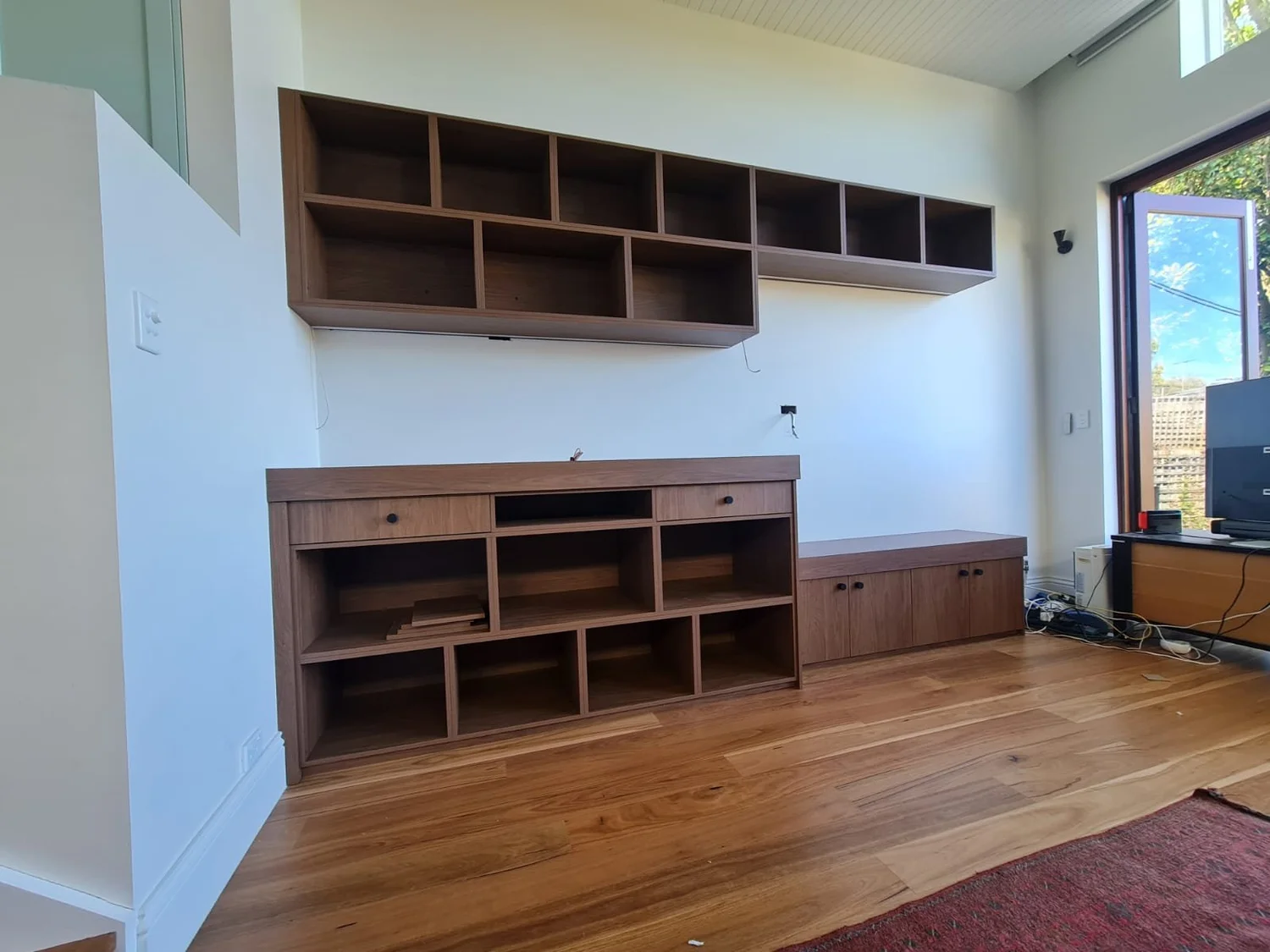
Walnut: deep, warm and quiet
Walnut is a dark brown timber with a strong, flowing grain. It brings the warmth of a library or a well-made piece of furniture, and it makes a room feel enclosed in the best sense.
Where it belongs: generous living rooms with good daylight, mid-century and contemporary interiors, and media walls where the screen should recede. A switched-off television sits far more quietly in a dark wall than a light one.
Watch for: in a small or dim room, a full wall of walnut can feel heavy. Use it on the feature panel or the base cabinets and keep the shelving or surrounding walls lighter.
Oak: light, calm and easy to live with
Oak is a pale to mid-toned timber with a fine, even grain. It brings warmth without darkening a room, and it sits comfortably with almost any wall colour or floor.
Where it belongs: Scandinavian, Japandi and coastal interiors, apartments, and rooms where the joinery should feel relaxed rather than formal. It is a fine choice for a home office — calm to sit in front of all day.
Watch for: oak joinery beside an oak-look floor can read as a near miss. Choose a tone clearly lighter or darker than the floor.
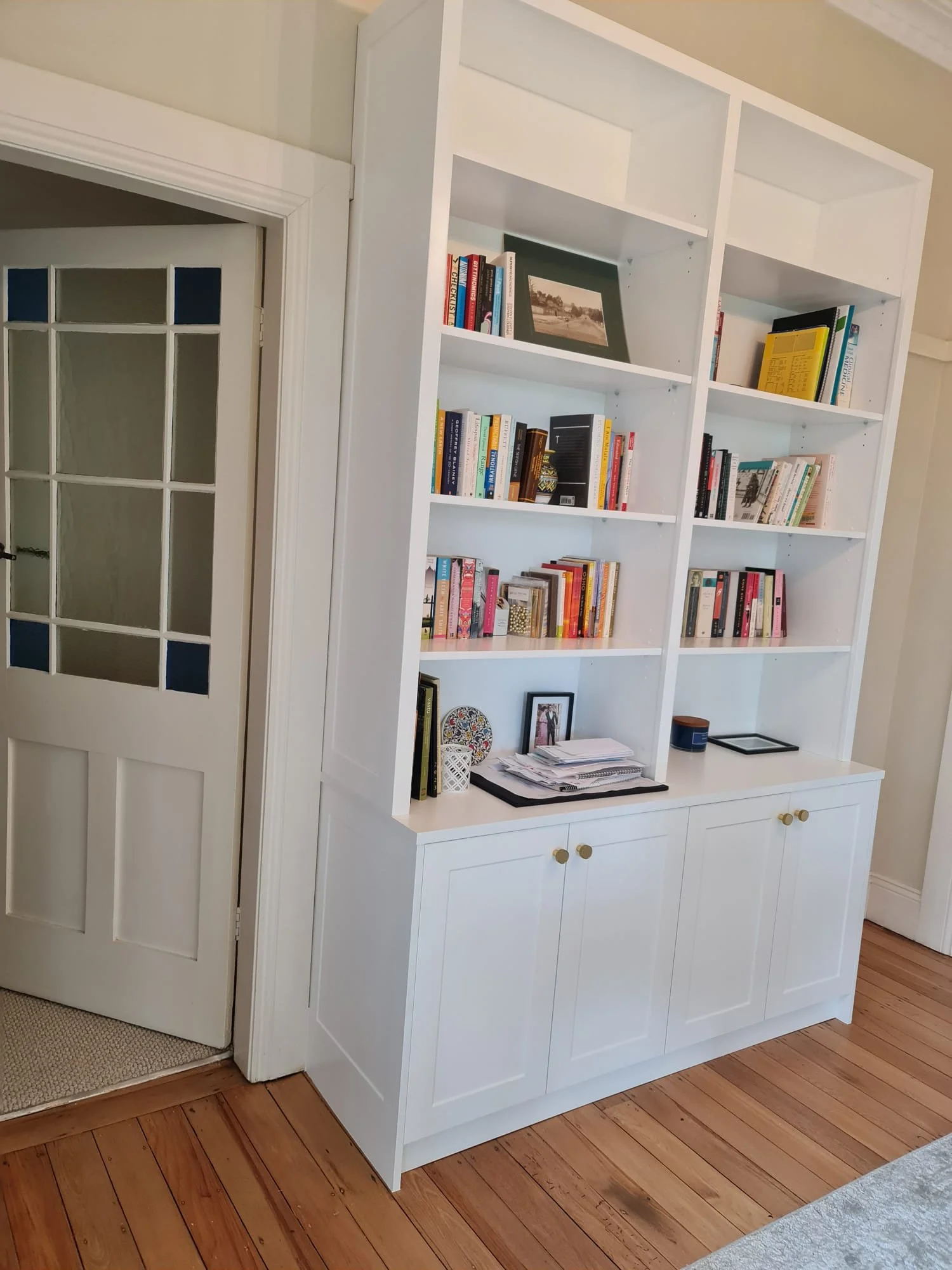
White: clean and composed
White joinery steps back and lets the room, the art and the view lead. A white media wall in a white room reads as architecture rather than furniture.
Where it belongs: small rooms, Hamptons and classic interiors with Shaker doors, and rooms with strong colour elsewhere.
Watch for: a black screen stands out on white. A timber or painted feature panel behind it softens the contrast. Choose a matt or satin finish so the drawers you use every day show fewer fingerprints.
White and oak together
"White and oak" is a common search, and for good reason. White cupboards with an oak desktop, shelf or feature panel give you a light room with warmth exactly where the eye and hand land. It is one of the easiest pairings to get right.
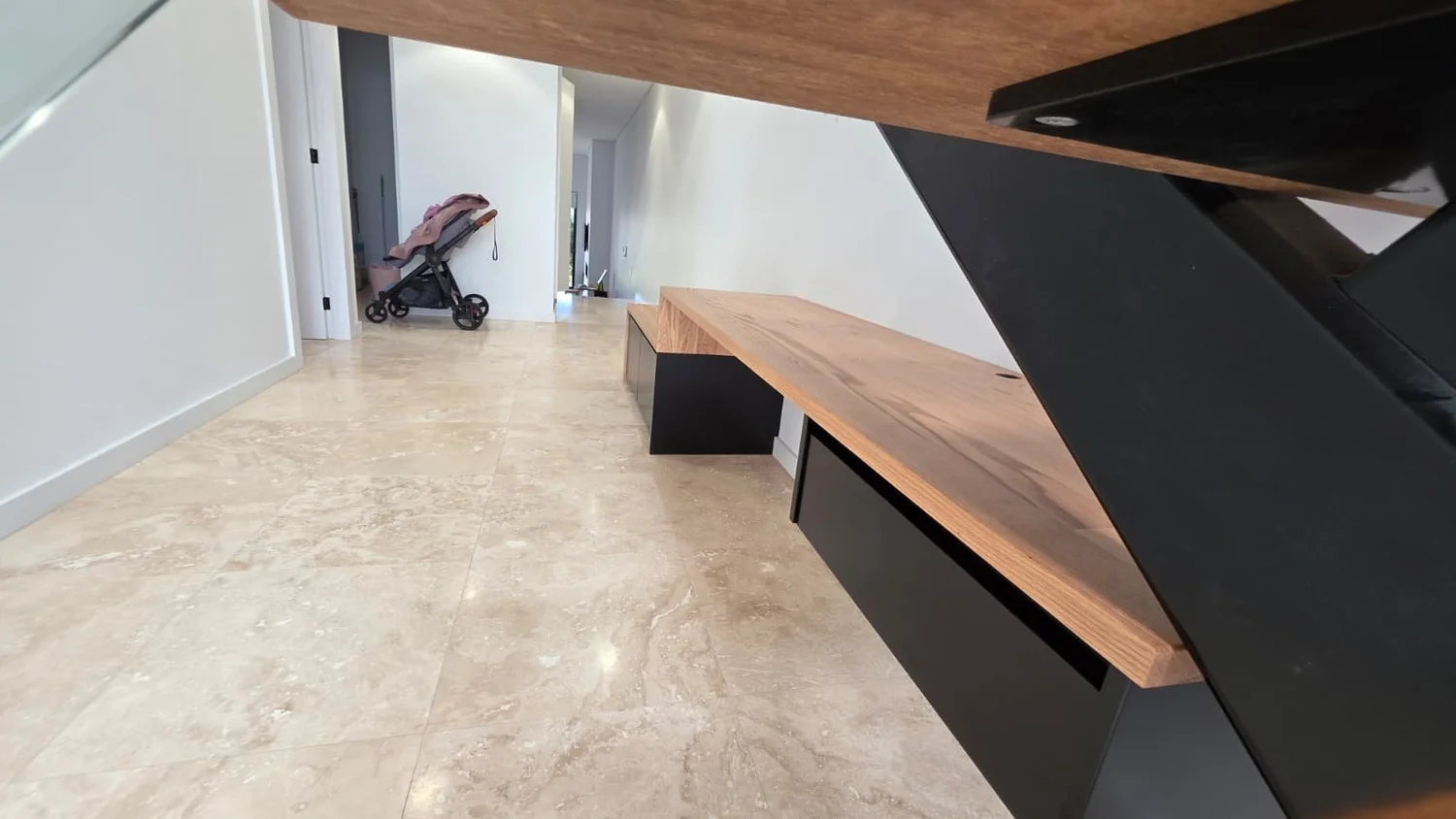
From our workshop: two materials, one idea
Our under-stair desk uses just two finishes: a solid oak top over matt black cabinetry. The dark base recedes, so the eye goes straight to the warm timber of the desktop. On Nickaz Australia's office, the same restraint runs at a larger scale — matt black, white stone and oak carried from the storage wall to the kitchenette to the island bench. The lesson carries to any TV unit or desk: choose one finish to lead and one to support, and repeat them.
Three ways to get the look
The colour is only half the decision. The material decides the price, the feel under your hand and how it wears.
Timber veneer. A thin layer of real timber over a stable board. Every panel carries natural grain and colour variation, and veneer gives you real walnut or oak without the movement of solid timber across a large panel.
Woodgrain decorative board. A printed, textured surface over board, from makers such as Polytec and Laminex. Consistent from panel to panel, hard-wearing and usually more affordable than veneer — a good choice for cupboard interiors and busy family rooms.
Painted finish. Smooth, in any colour you choose. Ideal for white joinery, Shaker doors and coloured feature walls.
Many of our walls combine them: decorative board inside the cupboards, veneer or a painted finish on the faces you see.
How to choose for your room
Start with the floor. It is the largest surface in the room. Contrast with it or match it closely — not something in between.
Check the light. Look at samples in the room at night as well as by day.
Think about the screen. Darker walls absorb a switched-off television; lighter walls make it stand out.
Consider wear. A desk you lean on daily needs a tougher surface than a high shelf.
Use real samples. A swatch on a screen tells you little. Hold a sample against your own floor and walls before you decide.
Frequently asked questions
Is walnut too dark for a small room?
It can be as a full wall. Use walnut on one part, such as the feature panel or the base cabinets, and keep the rest lighter.
What is the difference between timber veneer and woodgrain board?
Veneer is real timber, so every panel is slightly different. Woodgrain board is a printed surface that is more uniform and usually more affordable.
What colour TV unit goes with a dark floor?
White, light oak or a painted colour gives contrast. Walnut on a dark floor can work, but the room will feel darker.
Can a desk and a TV unit in the same room have different finishes?
Yes, as long as they share something: the same handle, the same white, or the same timber on one surface.
Our advice on finishes
Choose the timber for the room you have, not the one in the photograph. Let one material lead and one support, repeat them, and keep everything else quiet. A finish chosen that way still looks right in ten years, long after the trend that suggested it has moved on.
Browse finished work in the media walls and TV units gallery and the home office and library gallery. If you are weighing up finishes, we would be glad to talk them through in your room. Book a free measure and quote or call 0420 555 284.